AI in Digital Marketing 2025: The Future of Smarter Campaigns
AI in Digital Marketing,In the rapidly evolving landscape of digital marketing, artificial intelligence (AI) is emerging as a transformative force set to redefine how brands connect with their audiences. By 2025, AI will not only streamline marketing processes but also enable hyper-personalized, data-driven campaigns that deliver unprecedented engagement and ROI. As technology advances, marketers are increasingly leveraging AI to anticipate consumer needs, optimize strategies in real-time, and create smarter, more efficient campaigns. This evolution promises a future where marketing efforts are more intuitive, dynamic, and impactful than ever before. Understanding these changes is crucial for businesses aiming to stay competitive and innovative in the digital age.
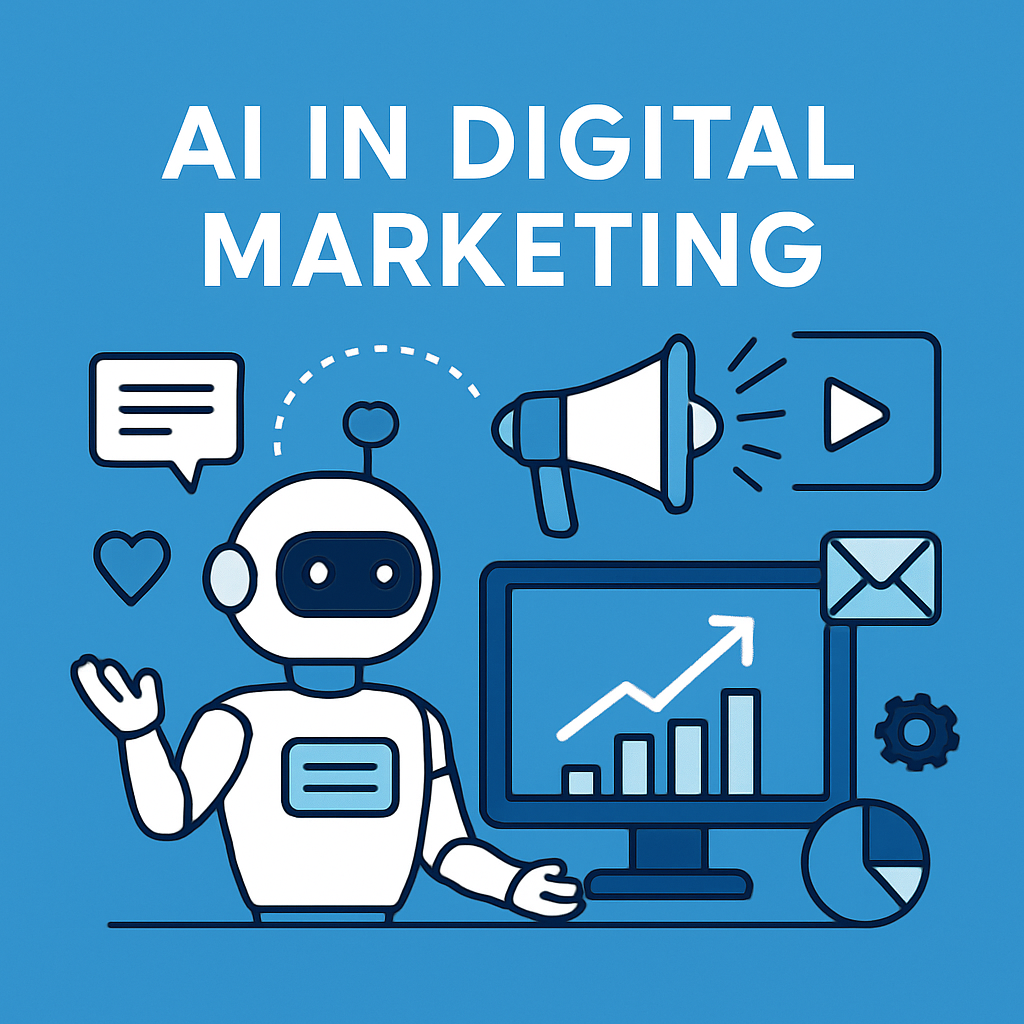
The Rise of AI-Driven Personalization
AI in digital marketing for 2025 is centered around creating deeply personalized customer experiences. As data collection becomes more sophisticated, AI algorithms analyze vast amounts of information—from browsing behavior to social media activity—to craft individualized content and offers. This level of personalization ensures that consumers receive relevant messages at the right time, significantly increasing conversion rates and brand loyalty. AI-powered personalization not only enhances user satisfaction but also helps companies stand out in crowded markets by delivering tailored experiences that resonate on a personal level.
AI enables real-time adaptation of marketing messages based on user interactions, making campaigns more responsive and engaging. For example, e-commerce platforms can dynamically alter product recommendations as customers browse, increasing the likelihood of purchase. Moreover, predictive analytics allow marketers to anticipate future behaviors and preferences, ensuring communications remain relevant over time. As a result, businesses will shift from broad segmentation toward hyper-targeted strategies driven entirely by AI insights.AI in Digital Marketing
- Examples of AI-driven personalization include:
- Dynamic website content that adapts based on visitor behavior.
- Personalized email campaigns triggered by specific user actions.
- Customized product recommendations on retail platforms.
- Chatbots delivering tailored support conversations.
- Adaptive advertising that changes messaging based on user context.*
Ultimately, AI-powered personalization fosters deeper connections between brands and consumers while boosting campaign efficiency. Marketers who harness these capabilities will be better positioned to deliver meaningful experiences that drive long-term loyalty.
Enhanced Data Analytics and Insights
Data analytics forms the backbone of effective digital marketing strategies in 2025, with AI taking this to new heights. Advanced machine learning models process enormous datasets faster than any human could, uncovering hidden patterns and insights essential for decision-making. This deep analysis allows marketers to understand customer behaviors at an unprecedented granularity—identifying trends before they become obvious—and tailor campaigns accordingly.
AI-driven analytics facilitate continuous optimization by providing real-time feedback on campaign performance. Marketers can adjust their strategies instantaneously—whether shifting ad spend or refining messaging—to maximize effectiveness. Furthermore, predictive analytics forecast future outcomes based on current data trajectories, enabling proactive planning rather than reactive responses.
- Specific applications include:
- Customer segmentation based on behavioral data.
- Predictive lead scoring for sales prioritization.
- Sentiment analysis across social media channels.
- Churn prediction models identifying at-risk customers.
- Automated reporting dashboards summarizing key metrics.*
With these capabilities, businesses gain a clearer understanding of their audience’s needs and preferences. Such insights empower marketers to develop more targeted campaigns that yield higher engagement rates and better ROI.AI in Digital Marketing
Automation Revolutionizes Campaign Management
Automation has been a staple of digital marketing for years; however, by 2025 it will reach new levels thanks to AI integration. Intelligent automation handles repetitive tasks such as bid adjustments, audience targeting updates, content scheduling, and performance monitoring without human intervention. This allows marketing teams to focus their creativity and strategic thinking on high-impact activities rather than routine operations.
AI-powered automation systems learn from ongoing campaign data to improve themselves continuously—optimizing ad placements or adjusting messaging dynamically based on performance metrics. They also facilitate cross-channel synchronization—ensuring consistency across email, social media, search ads, and other platforms seamlessly.
- Examples of AI-driven automation include:
- Programmatic advertising platforms automatically adjusting bids in real-time.
- Chatbots handling customer inquiries around the clock with natural language processing.
- Automated A/B testing of landing pages or ad creatives.
- Dynamic content generation tailored for individual users.
- Multi-channel campaign orchestration ensuring message consistency.*
This shift toward intelligent automation results in faster campaign deployment cycles and improved resource allocation. Companies adopting these tools will enjoy heightened agility and better responsiveness to market fluctuations.AI in Digital Marketing
Voice Search Optimization Becomes Essential
As voice assistants like Alexa, Google Assistant, and Siri become integral parts of daily life by 2025, optimizing for voice search will be crucial for digital marketing success. AI plays a vital role in understanding natural language queries and delivering precise answers—changing how brands approach SEO.
Voice search optimization involves rethinking keyword strategies since conversational phrases often differ from traditional keywords. Additionally, structured data markup helps voice assistants interpret content accurately so they can provide relevant snippets when users ask questions related to products or services.
- Key practices include:
- Creating content that answers common spoken questions directly.
- Using natural language keywords aligned with conversational search queries.
- Implementing schema markup for rich snippets.
- Prioritizing local SEO since many voice searches are location-specific.
- Developing FAQ sections tailored for voice recognition systems.*
By adapting to this trend early on, brands can capture voice-based traffic ahead of competitors. As voice search continues expanding its influence on consumer decision-making, integrating it into overall digital strategies becomes imperative.
Ethical AI Use and Data Privacy
With the increasing reliance on AI in digital marketing comes a heightened focus on ethical considerations and data privacy regulations by 2025. Consumers are more aware than ever about how their data is collected and used; thus, transparency becomes critical for maintaining trust.
Marketers must navigate complex legal landscapes such as GDPR and CCPA while leveraging AI responsibly. This includes ensuring data collection practices are transparent, obtaining explicit consent when necessary, and implementing robust security measures against breaches or misuse.
- Best practices involve:
- Clearly communicating data usage policies to consumers.
- Anonymizing personal information whenever possible.
- Offering easy opt-out options for targeted advertising.
- Regularly auditing algorithms for bias or unfair treatment.
- Staying updated with evolving privacy regulations.*
Balancing innovation with ethical responsibility will define successful AI adoption in digital marketing moving forward. Companies committed to ethical practices will foster stronger customer relationships built on trust.
The Role of Augmented Reality (AR) & Virtual Reality (VR)
Augmented reality (AR) and virtual reality (VR), powered by AI technologies, are transforming how brands engage audiences through immersive experiences in 2025. These tools allow consumers to interact with products virtually before making purchase decisions or participate in engaging brand stories within simulated environments.
AI enhances AR/VR experiences by providing real-time interaction capabilities—such as personalized virtual try-ons or customized virtual tours—that adapt based on user inputs or preferences. Retailers can leverage AR/VR for virtual fitting rooms; automotive companies might offer virtual test drives; real estate agencies can present immersive property walkthroughs—all driven by intelligent systems responding dynamically to user behavior.
- Examples include:
- Virtual fashion try-ons that recommend styles based on previous choices.
- Interactive virtual showrooms allowing personalized product exploration.
- Immersive brand storytelling through VR experiences tailored per viewer interests.
- Real-time avatar customization during virtual events.
- Augmented reality overlays enhancing physical shopping trips.*
These immersive technologies help brands forge emotional connections with consumers while offering memorable interactions that influence purchasing decisions positively.AI in Digital Marketing
The Future Outlook: Preparing for an AI-Driven Marketing Era
As we look towards 2025’s digital marketing landscape shaped heavily by AI advancements, preparing organizations involves investing in talent development as well as technology infrastructure. Companies must embrace continuous learning about emerging tools like machine learning frameworks or natural language processing systems while fostering an innovative mindset among teams.
Furthermore, integrating AI seamlessly into existing workflows requires strategic planning—aligning technological capabilities with business goals—and establishing clear governance structures around data ethics and compliance standards. Collaboration between technical experts and creative professionals will be essential to realize full potential without sacrificing authenticity or transparency.
Key steps include:
- Building interdisciplinary teams combining data science expertise with creative talent.
- Investing in scalable cloud infrastructure capable of handling large datasets efficiently.
- Developing internal training programs focused on emerging AI tools relevant to marketing tasks.
- Establishing governance policies emphasizing responsible use of customer data.
- Experimenting with pilot projects before full-scale implementation.*
Embracing the Future: How AI Will Shape Smarter Campaigns in Digital Marketing
The integration of artificial intelligence into digital marketing is revolutionizing how brands approach customer engagement now—and this transformation shows no signs of slowing down into 2025 and beyond. From hyper-personalization driven by deep learning algorithms to immersive AR/VR experiences enhanced through AI responsiveness—it’s clear that future campaigns will be smarter in every sense of the word.
Businesses willing to innovate responsibly while embracing these cutting-edge technologies stand poised to gain competitive advantages through increased efficiency, better customer insights, richer interactions—and ultimately stronger brand loyalty. As we progress toward an era where artificial intelligence becomes ubiquitous within marketing ecosystems throughout industries worldwide—the companies readying themselves today will lead tomorrow’s successful campaigns.
In conclusion—
or rather reflection—the future belongs to those who leverage intelligent automation thoughtfully while maintaining ethical standards; those who prioritize authentic connections amid technological advances; those who recognize that at its core — despite all the innovation — great marketing still relies fundamentally on understanding human needs at an empathetic level enriched by smart technology solutions designed specifically for tomorrow’s world.